Premier League Opens New Office in Mumbai
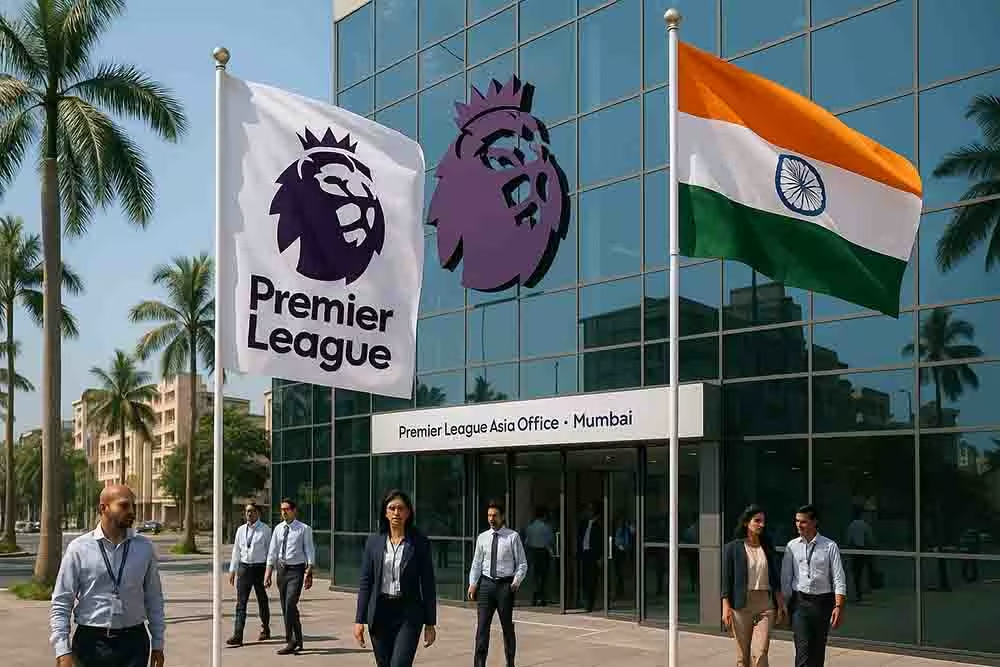
At the end of April 2025, the English Premier League opened a new overseas office in Mumbai, India, and began to move in earnest to expand its Asian market. It is the third official branch in Asia that the Premier League has opened after China and Singapore. The issue of entering India is to expand the brand value of EPL globally by strengthening partnerships in Asia, fostering youth soccer, and spreading digital content, especially to India.
Premier League CEO Richard Masters said in the opening ceremony, “India is a fast-growing sports market, a region where Premier League fandom is already deeply rooted. This office will go beyond mere administrative functions and serve as a strategic hub for connecting the local and the EPL.” What he said shows is how important the Indian market is.
India and Premier League are already best friends
The Premier League has a long-standing relationship with India. Since 2007, the EPL has been operating youth football education programs in partnership with Indian schools, and since 2014, it has collaborated with the Indian Super League (ISL) in various ways, including training coaches, training referees, and supporting league infrastructure.
As of 2024, Premier League India has more than 5 million followers on its official SNS account, and goods sales by popular clubs such as Manchester United, Liverpool, and Manchester City are second only to China in Asia.
Every season’s live broadcast of EPL games is broadcasted through broadcasters and OTT platforms across India, and highlight videos and EPL contents also have high views.
This Mumbai office opening is a design for the future.
It’s not just an extension!
When I first saw this news, I thought, “Oh, is it global marketing again?” But when I looked closer, it wasn’t just a branch establishment or fan service. It’s literally a sign that EPL will see India as the next Europe? It feels like that.
India is the second most populous country in the world (1.4 billion people), and the fact that so many people are watching EPL means that the standards of future fandom and consumers could change completely. And if young people in India grow up watching EPL highlights on YouTube, their influence will be revealed in figures in the next 10 years.
The next stage of football globalization is sure to be India
Previously, the globalization of soccer was centered on East Asia (China, Korea, and Japan), but now its focus is moving to India.
In particular, he is a leading candidate (2027) for the FIFA Women’s World Cup, and it is a testament to India’s growing position in the international soccer community. The government-level sports promotion policy is also raising public health and sports participation as a national strategy through campaigns such as the Fit India Movement.
I think it’s a ‘strategic move’ for EPL to go one step ahead and establish a base in this atmosphere.
A lot of homework to do
No matter how much EPL it is, it will take time to adapt to India’s sports culture. To name a few specific challenges:
- Cricket dominance: Cricket still captures over 70% of daily sports viewing in India. Football remains second fiddle.
- Monetization barriers: Income disparity and digital payment gaps may limit paid subscriptions and merchandise revenue.
- Potential ISL conflict: A growing EPL brand could overshadow the domestic Indian Super League.
Still, these are solvable problems—especially if the EPL leans into partnerships, grassroots development, and local community outreach. Shared value creation is the key to longevity.